The Castillion - The Fall of the Son will be released on July 10, 2026
Noble Metal
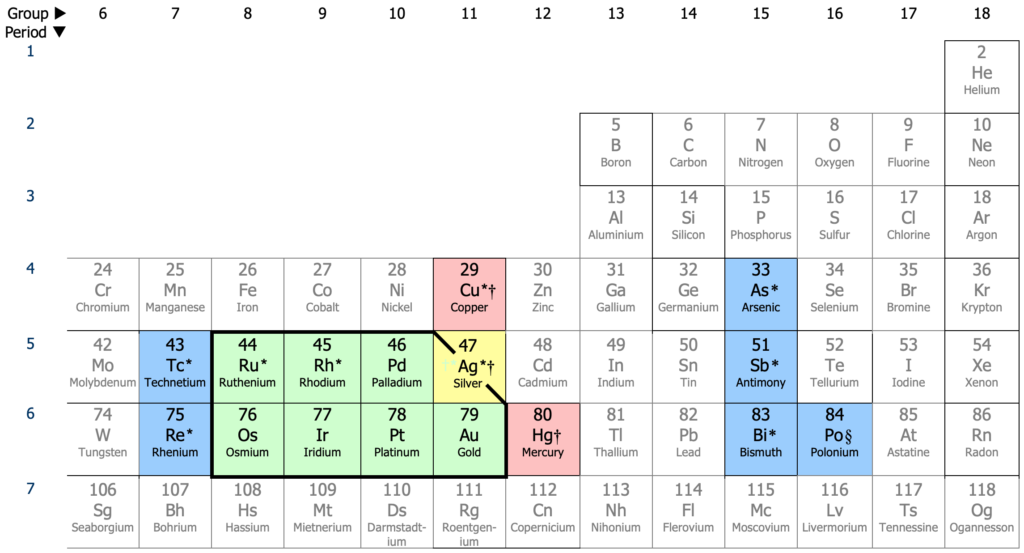
A noble metal is a metallic chemical element that is resistant to corrosion and is usually found in nature in its raw form. Gold, platinum, and the other platinum group metals (ruthenium, rhodium, palladium, osmium, iridium) are most often so classified. Silver, copper, and mercury are sometimes included as noble metals, but each of these usually occurs in nature combined with sulfur.
In more specialized fields of study and applications, the number of elements counted as noble metals can vary. In some contexts, the term is used only for copper, silver, and gold which have filled d-bands. In others, it is applied more broadly to any metallic or semimetallic element that does not react with a weak acid and give off hydrogen gas in the process. This broader set includes copper, mercury, technetium, rhenium, arsenic, antimony, bismuth, polonium, gold, the six platinum group metals, and silver.
Many of the noble metals are used in alloys for jewelry or coinage. All the metals are important heterogeneous catalysts.
(Wikipedia contributors. (2026, February 9). Noble metal. In Wikipedia, The Free Encyclopedia.)
Noble Metals Recognition
Green – Most often
Yellow – Often
Red – Sometimes
Blue – In a limited sense