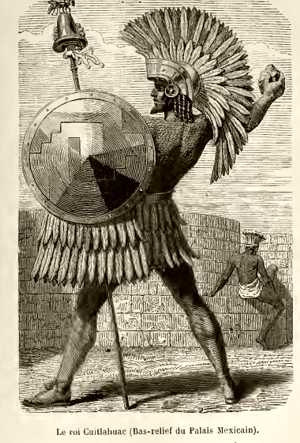
Cuitlahuac (1476 - 1520)
(kwi’tlawak) – becomes emperor of the Aztec Empire after the death of Moctezuma II in 1520. He initially leads the resistance against Hernán Cortés and the Spanish conquistadors; but when faced with certain defeat, Cuitláhuac makes a deal with a devil that goes by the name of The Castillion. In exchange for his own sacrifice, Cuitláhuac asks that his people be spared and their way of life be preserved until he can return.
The entire city of Tenochtitlan looks on in awe as the Castillion sacrifices Cuitláhuac and eats his heart, performing The Black Rite for the first time. Cuitláhuac’s consciousness is preserved within the Castillion, ready to be transferred to his first born son. An era of prosperity and technological advancement soon follows for the city of Tenochtitlan and the Aztec people, which they see as being a direct result of Cuitláhuac’s sacrifice.
More than 500 years have passed since those ancient times. Throughout the years the Aztecs built monuments and told stories of the legendary Aztec emperor who sacrificed himself to save their people and their city. Many still believe Cuitláhuac will return and bring about an era of renewed prosperity.
There have been many iterations of Cuitláhuac over the centuries. He has been reborn under the following names:
1. Cuitláhuac (unknown – 1521) – Aztec King reborn as the Castillion’s son.
2. Martin Atrevido del Castillo – second iteration
3. Martin Atrevido del Castillo II – third iteration
4. Martin Atrevido del Castillo III – fourth iteration
5. Cosme Atrevideo del Castillo – fifth iteration
6. Blas Atrevido del Castillo – sixth iteration
7. Manuel Atrevido del Castillo – seventh iteration
8. Martin Atrevido del Castillo – eighth iteration
9. Manuel Atrevido del Castillo II – ninth iteration
10. Manuel Atrevido del Castillo III (1974 – 2026) – tenth iteration